This article was written by Hannah Choo, a student completing her last year of high school in South Korea. Hannah is an intern at News Decoder and has provided the EYES team with extensive feedback on the EYES materials.
Engaging high school students with climate change is harder than it seems.
Some students feel existentially overwhelmed by its implications. Some are desensitized by how much it appears in our social media and conversations. And a few are entirely detached from the issue and unable to understand its impacts despite knowing of its existence.
What I have noticed, though, is that much of our climate change education comes from our surrounding environment and from school. So likely, whatever place your students may be at, it is mostly uniform throughout your classes.
The EYES curriculum was the first time I was provided an in-depth guide into climate change. While I cannot speak for all high school curriculums, my high school curriculum does not offer any extensive research on climate science. Hence, much of my knowledge and the knowledge of my peers, is based on things we’ve heard, learned previously in middle school, or seen on the internet. I think this has still provided us with a good baseline knowledge, but few know the nuances of the climate crisis and its potential solutions.
What I hope educators will use this curriculum for is to help empower students to create change.
Almost every student my age knows of Greta Thunberg. The 15-year old who started a global climate strike movement by sitting out of school every Friday. While she is incredibly inspiring and serves as a role model for many of us, it’s also difficult to visualize how we may be able to replicate and amplify her mission.
I think that for students, there often exists a barrier of uncertainty in the idea of taking the first step towards creating change. You don’t know if your idea will even come to fruition to begin with. You have few resources and maybe a dozen people, if not less, who seem willing to follow your idea. Sometimes, that idea just looks like handing out a few flyers, and you’re not sure if that’s really enough in the face of a looming catastrophe.
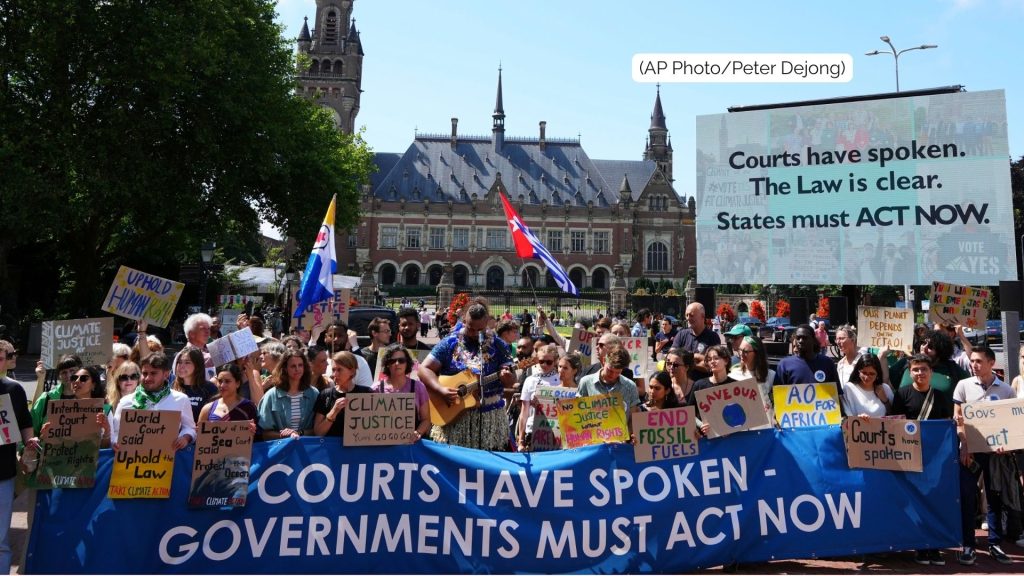
But this is what I love about the EYES curriculum. It doesn’t just end with telling an inspiring story. It embeds little projects in between that help guide students towards creating change in small paced steps and gives students a place they can start, which is really often the hardest part.
Everywhere has its own climate story
Something I’ve learned from this curriculum is that every place has its own climate story. I think it is important that educators help students to engage with this story. For much of my life, I felt detached from the climate crisis. I was privileged enough to live in a place where the effects of climate change were less experienced and hence, attempted more to empathize with people miles away who lived on sinking islands and disaster-prone homes.
Now, as I sit and soak in Korea’s rapidly fluctuating weather that changes dozens of degrees in the span of hours, dangerous monsoon season flooding, and canceled sports practices due to heavy air pollution, climate change looms over my head like a dark cloud.
The truth is that if you live on Earth, climate change affects you. Period. Not just that it will affect you, but that it is already affecting you. Your job then is to see how your local community is being affected, and I hope that that is something students will endeavor to explore.
Despite how overwhelming climate change may seem as a global science phenomena, I think it is much more digestible for students when they view it from a local perspective and see how they can tackle problems in their own community.
The educator will play a large role in helping bring the EYES curriculum to life. Because students all around the world are at such varying places with their climate change knowledge and empathy, it is necessary that educators gauge where students are at and what may be most interesting or relevant to them, and then select units accordingly.
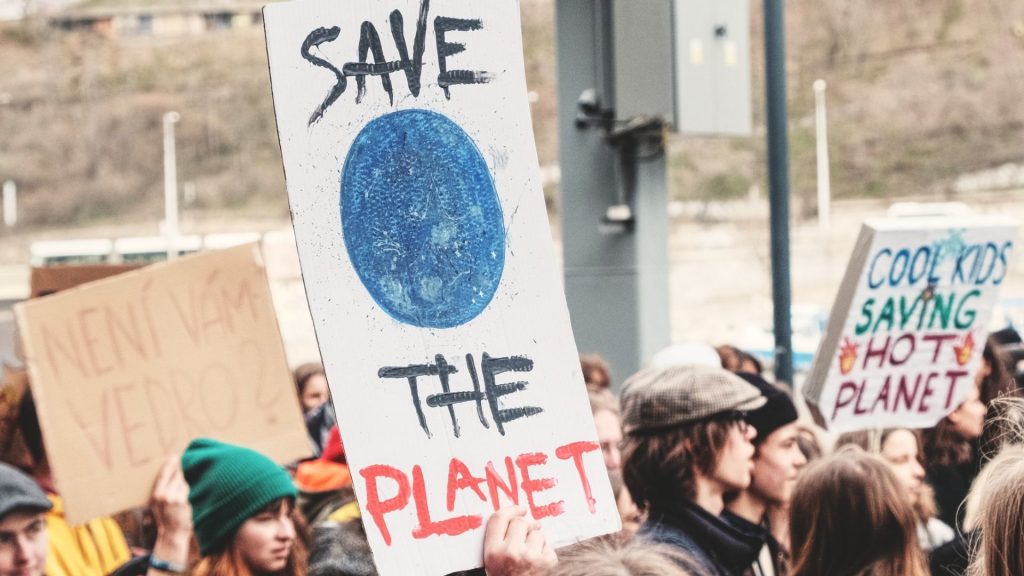
I think it would also be helpful if educators provide their own knowledge to help familiarize and personalize the curriculum for students. Is there anything you know about happening in your local area that you could share with students? Are there news websites you subscribe to that give you updates you could then spend 5 minutes every class informing your students on?
Students often love it when teachers bring in their own knowledge and personal anecdotes, as opposed to only teaching out of the textbook material. Also, are there any local field trips you could take?
By the end of the EYES unit, students should be able to walk away with something of their own. An article or a social media reel they’ve publicized and spread to over 50 people, a letter they’ve sent to a local politician, or maybe they’ve even gotten together to start a climate newsletter.
Could they expand that climate newsletter to other students around the world who are a part of EYES? Hopefully, it is about a specific issue they are truly passionate about, and not just a general overview about the “Effects of Climate Change.” And hopefully, they have ideas about how to expand their knowledge and their mini unit projects into something greater after the lessons finish.
Even if some students are not passionate about journalism, I think the EYES curriculum is well framed around the idea of storytelling. We may not all be journalists, but we are all certainly storytellers and will have to tell stories throughout our lives.
Perhaps students can be convinced that this is not a project to help students grow into better journalists (although it certainly will help for those who are interested), but rather a project about what it means to learn the story of climate change in your local community and then tell it back to the global audience.
And that this isn’t just about becoming educated on climate change and journalism, if not a way to connect with the people around you, listen to their perspectives, and advocate for their needs.