This article was written by Robert de Haan, who works for the environmental NGO Waddenvereniging as an educator and tour guide. Robert loves to see how people’s love for nature increases when he shows them its intricacies and beauty.
A worldwide connection
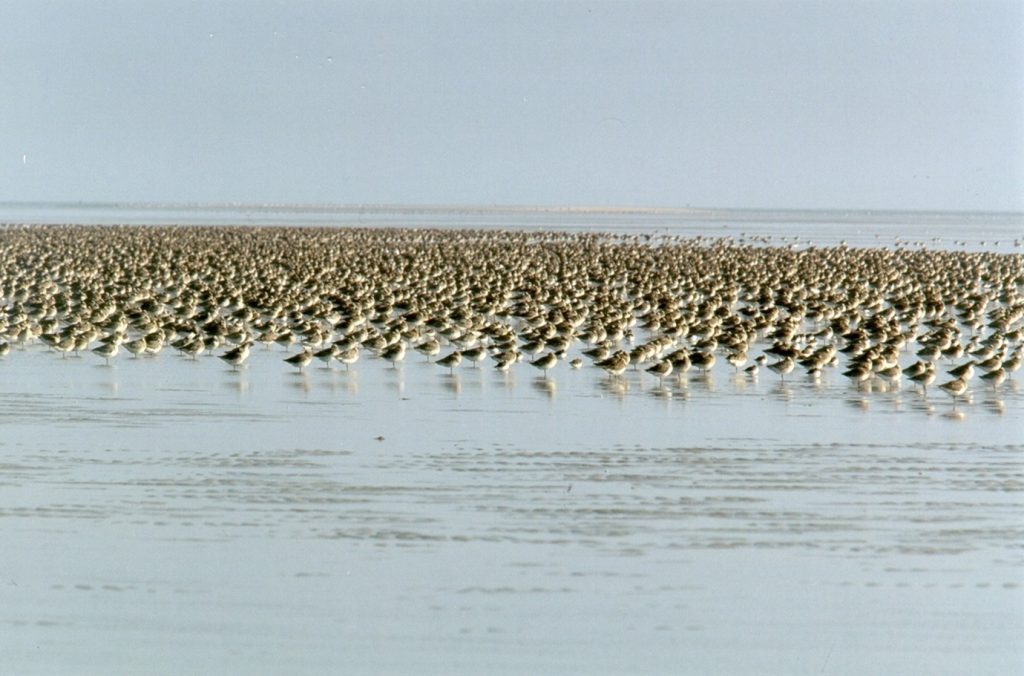
Imagine you are a red knot flying thousands of kilometers from West Africa to your breeding grounds in Siberia. Red knots are relatively small shorebirds from the family of sandpipers. As a red knot you need plenty of food for your journey as well as a perfect sense of timing. If red knots arrive too early or too late in spring their young will not have enough mosquitoes to feed on.
The Wadden Sea, which stretches between the Netherlands, Germany and Denmark, provides a large part of the food the red knot’s need along the way. After feeding here they fly to Siberia in one go without landing. This unique natural area can provide this food for red knots and millions of other migratory birds because of the very essence of the area.
The Wadden Sea is an intertidal area in which large parts of the seabed become dry mudflats at low tide. Because of this, these birds can reach worms and shellfish which otherwise would have been covered by water. This dynamic area has a clear impact on biodiversity world-wide because of its importance to migratory birds. This is one of the criteria which makes the Wadden Sea a natural UNESCO world heritage site.
The Wadden Sea is formed by the movement of the tides which brings in sand and deposits it somewhere, whilst somewhere else sand is taken away. This dynamic makes the area an ever-changing landscape. At the same time this makes the area vulnerable to change caused by large scale human activities in the area and elsewhere. One of the main threats to this providing area for migratory birds is the rising sea level. Simply because when the sea level rises faster than the deposition of sand, the mudflats will become smaller and will be dry for shorter periods.
In addition to sea level rising, extractive activities like gas drilling and salt mining cause the seabed to sink. This makes the natural deposition of sand likely not enough to keep the mudflats from disappearing under the water in the future.
At the Waddenvereniging (Wadden Association) we aim to protect this special UNESCO world heritage site through advocacy, projects that support nature restoration and by trying to rouse a love for the area through education and communication.
Experiencing is protecting
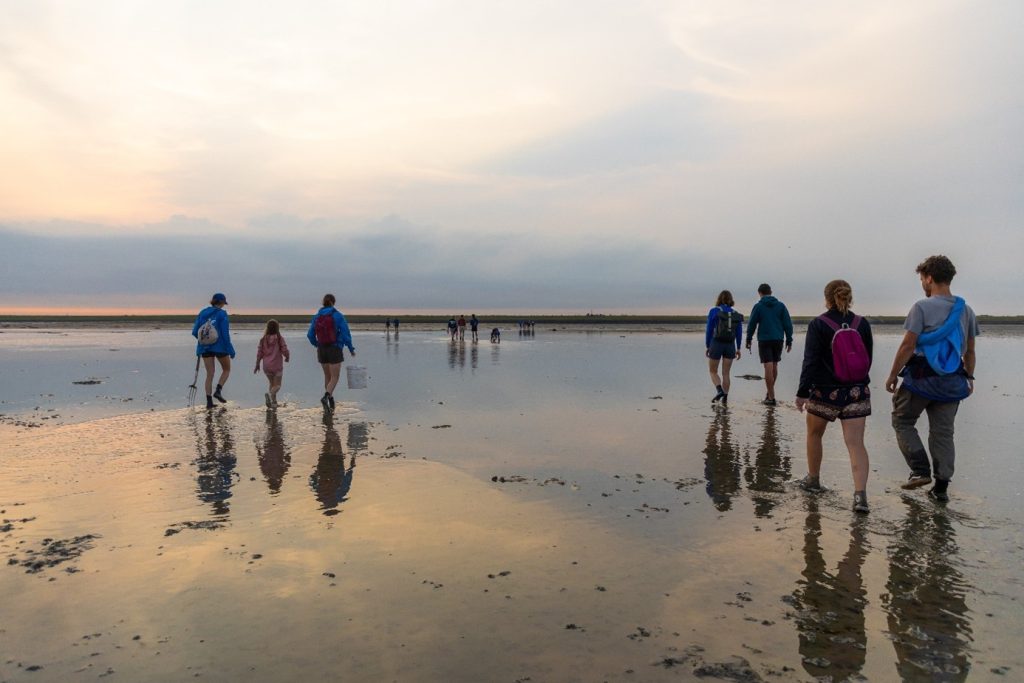
As an educator I want to educate people on the worth of the natural world of the Wadden Sea by letting them experience it for themselves. The main thought behind this is the willingness of people to intrinsically want to protect the places they know and love. The islands of the Wadden Sea are a popular destination for families to visit on vacation.
To tell the story of this area and show its importance we engage a group of more than a hundred, mainly young, volunteers that provide guided tours during the summer holiday season.
I think it is important to acknowledge that tourism also causes harm to the environment. But the stories must be told and shown so people can form a personal connection with the area. Through this connection people can intrinsically motivate themselves to advocate for nature. The aim is to guide the tourists that already visit the area in the best possible way with as little disturbance as possible.
Advocacy
As mentioned earlier, the Wadden Sea is under threat from human activities. As an organization, the Waddenvereniging not only educates people on these threats but also tries to directly advocate for this UNESCO site. When considering rising sea level, it is hard to directly influence this. We can, however, influence the human activities that threaten the natural environment in this intertidal landscape. The path the Waddenvereniging takes in advocacy is one of gradual escalation.
First, we try to engage stakeholders through positive dialogue. In some cases, companies appreciate the knowledge we have and try to work with us to safeguard the natural environment. If this does not work, we try to put pressure on the stakeholders that threaten nature through press and political lobby. As a final measure we engage in juridical procedures and try to hold companies and governments accountable to follow the rules put in place to protect nature.
I am happy to report on one of our latest success stories. Namely, the prevention of the drilling in a new gas field under the Wadden Sea. It took about ten years of conversation and political lobby to achieve this. This success would not have been possible if we did not have the support of people who love this unique natural area. Because nature cannot advocate for itself, we need to show people how precious and vulnerable it is, so that they want to advocate for it.
The Wadden Sea and all its natural inhabitants, cultural significance and yearly visiting feathered friends deserve to exist in the future. The area will change due to rising sea levels. The resilience of the area itself due to its dynamic nature might mitigate a part of this change. This is, however, much more difficult when human activity continues the way it does. By planting the seeds of love for the area in people I hope to get the collective consciousness to realize that the existence of the natural world in the Wadden Sea is not self-evident and deserves protection.