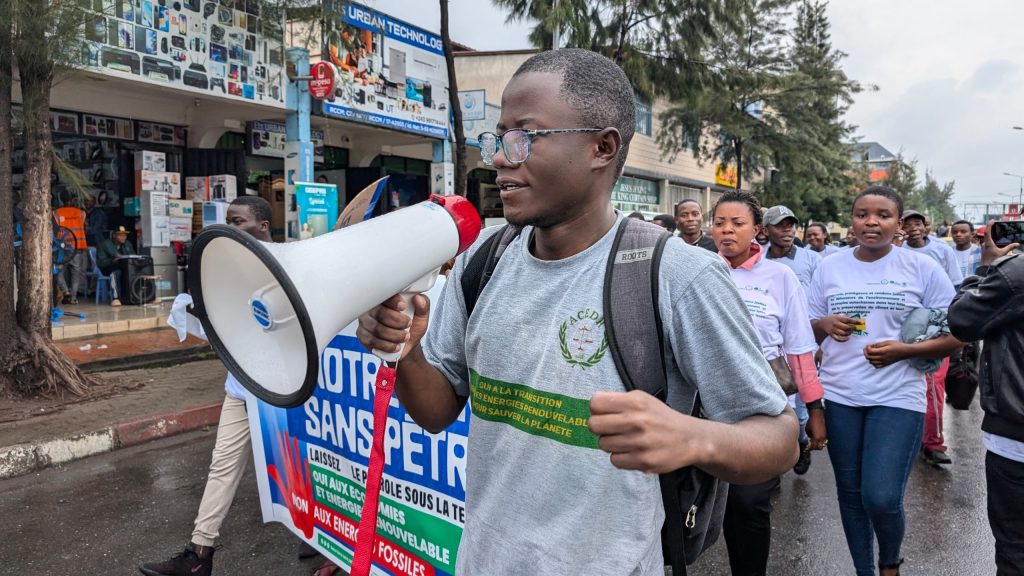
David Kithi is an expert in environmental management and sustainable development and a climate and social activist, based in Goma, DRC. He is the co-founder and coordinator of UCCND ASBL.
The Environment and Human Rights Academy’s programme manager, Andreea Pletea, spoke with David to gain a deeper understanding of the intersection of climate change and biodiversity in the Democratic Republic of Congo, and the deep cultural and environmental value of the Virunga National Park.
The below interview was translated from French.
Andreea: David, tell us about yourself and your organisation: where are you from and what do you do at UCCND ASBL?
David: My name is David KITHI. I am Congolese and I live in the city of Goma, in the Democratic Republic of Congo (DRC). I am the co-founder and current coordinator of UCCND ASBL, a non-profit organisation based in DRC.
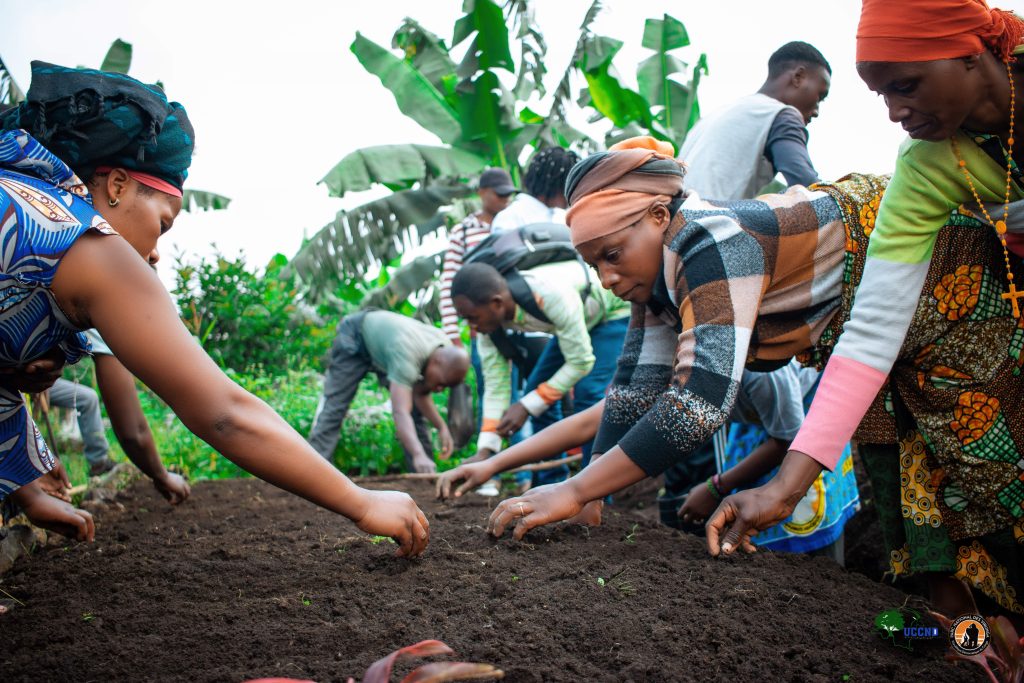
Our organisation, UCCND ASBL, works actively in partnership with Virunga National Park to contribute to the sustainable conservation of its biodiversity and to improving the living conditions of local communities. We do this by implementing environmental and climate education projects with a particular focus on young people, restoring destroyed forest ecosystems in villages around the Park, and training local communities in sustainable and smart agriculture.
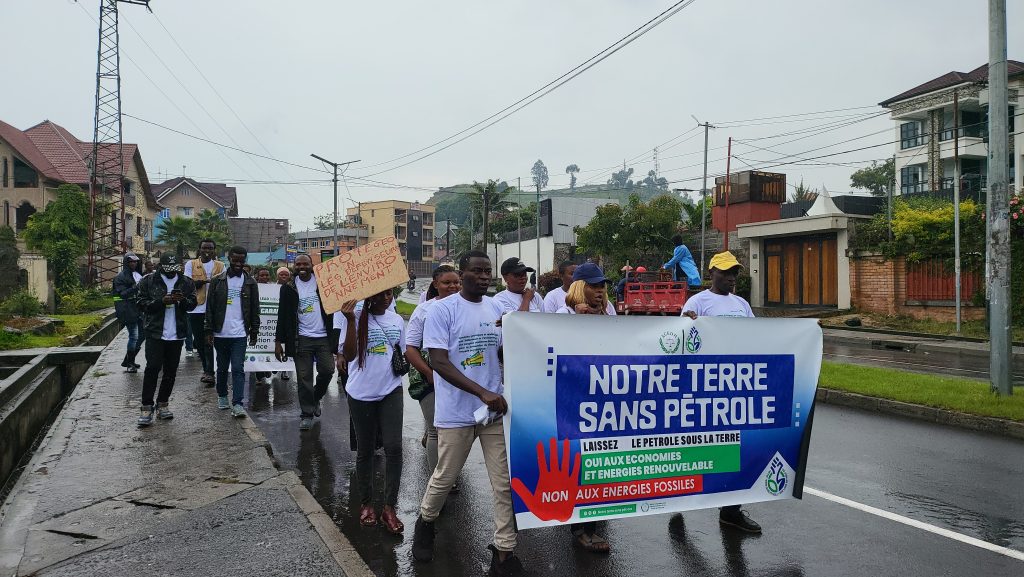
We also fight against oil and gas exploration and exploitation projects in Virunga National Park, because these initiatives endanger the livelihoods of local communities, the climate, and the region’s rich biodiversity. We do this by organising awareness campaigns and community mobilisation efforts to push the Congolese government to abandon these destructive projects.
We are also working to promote clean energy by developing improved cookstoves and eco-friendly briquettes so that local communities have access to clean and renewable energy sources for household cooking, while protecting the Park’s forest ecosystems.
Andreea: How did you come to do this important work?
David: During my childhood, I left the city of Beni, where I was born, to visit my grandfather, who was a cook for tourists in the village of Mutwanga, bordering the Virunga National Park at the foot of Mount Ruwenzori. During the journey through Virunga National Park, I had the opportunity to admire its rich biodiversity. That experience sparked a passion, from a very young age, for Virunga National Park, its flora and fauna.
This passion for biodiversity led me to choose the veterinary track in secondary school, where I obtained my secondary school diploma. I then continued my university studies in environmental management, where I earned my bachelor’s degree.
As I grew up, I observed an alarming decline in wildlife populations and forest cover in the Park. Added to this is the intensification of the effects of climate change experienced by local communities and Indigenous peoples in the region, as well as increasing initiatives to explore and exploit fossil fuels (oil and gas) in violation of the rights of local communities and Indigenous peoples.
This is what motivates me in my work: together with our local communities and Indigenous peoples, to fight against all these environmental problems, in order to give present and future generations the chance to contemplate the rich biodiversity of Virunga National Park and live in a healthy environment. This is precisely what led to the creation of UCCND ASBL in 2020 – to enable us to take coordinated action and have a lasting and significant impact on the ground.
Andreea: What should young people around the world know about the Virunga National Park?
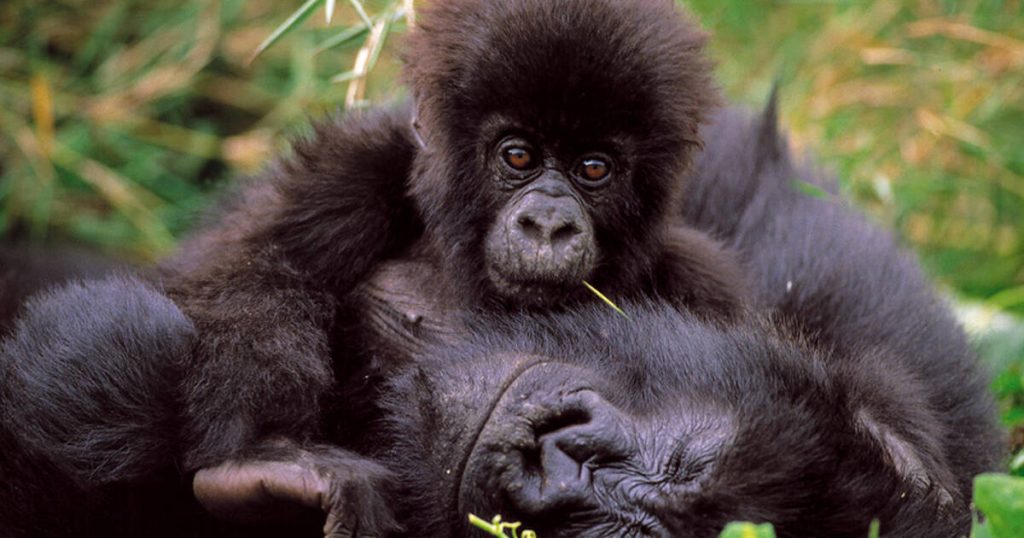
David: Young people around the world should know that the Virunga National Park is located in the east of the Democratic Republic of Congo, in the North Kivu Province. It was the very first national park created on the African continent, on 21 April 1925, and was listed as a UNESCO World Heritage Site in 1979. Virunga National Park covers 7,800 km² and is home to the most extraordinary biodiversity on the African continent, with many species endemic to the Albertine Rift (species of flora and fauna that are found only in the Park and nowhere else). It is the only protected area in the world that is home to three species of great apes (the mountain gorilla, the eastern lowland gorilla, and the eastern chimpanzee).
The Park is also distinguished by its chain of active volcanoes (including Mount Nyiragongo, the most active volcano on the African continent) and by the richness of its variety of habitats, which surpasses that of any other African park, ranging from steppes, savannas, lava plains, swamps, lowlands and Afromontane forest belts, to its unique Afro-alpine vegetation and the ice fields of the Ruwenzori mountains, whose peaks rise above 5,000 meters.
It is estimated that five million people live within a day’s walk from the Park’s borders, making it one of the most densely populated rural areas on the African continent. The main source of livelihood of the communities surrounding the Park is agriculture.
The ICCN is the government institution responsible for the Park’s daily management, with a team of eco-guards who, day and night – sometimes at the expense of their lives – protect the Park’s rich biodiversity.
Andreea: Why is the Park at the heart of the climate and biodiversity conversation?
David: Virunga National Park is central to discussions on climate and biodiversity because of its exceptional wealth of endemic animal and plant species, the significant contribution of its forests to the sequestration of greenhouse gases emitted worldwide – thereby helping fight climate change for the survival of humanity – and the major threats it faces, which require strategies for its long-term conservation.
Andreea: What threatens the integrity of protected biodiversity areas in the DRC such as Virunga National Park?
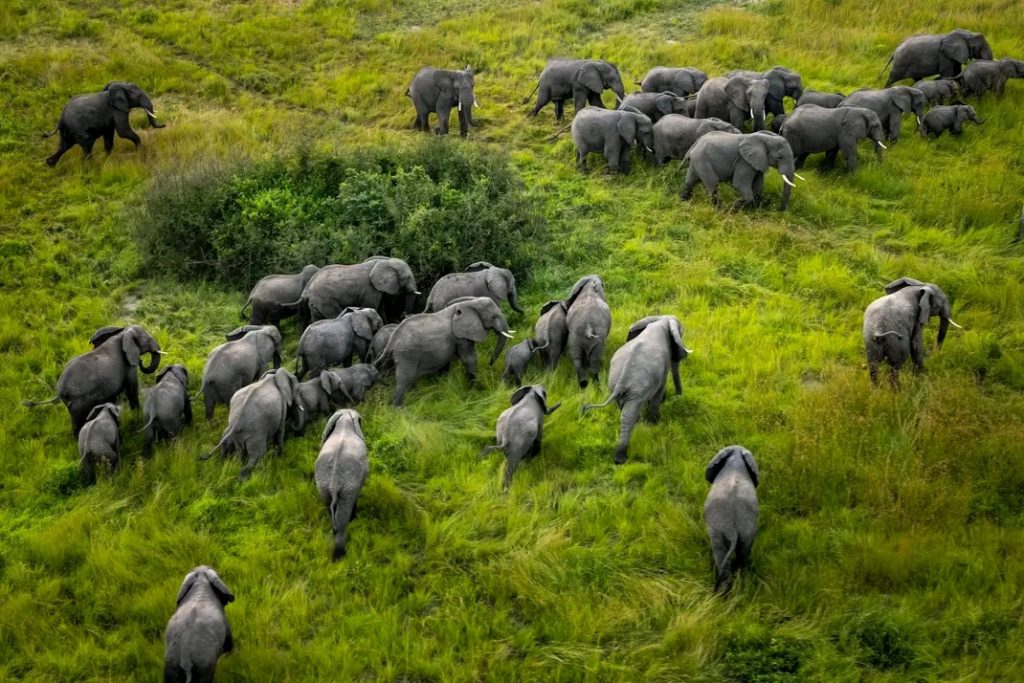
David: Threats to Virunga’s biodiversity include the presence of armed groups inside and around the Park, which contributes significantly to the excessive cutting of trees for charcoal production; poaching for the trafficking of bushmeat and elephant ivory; illegal fishing on Lake Edward, which is part of the Park on the Congolese side; armed groups encouraging illegal farming inside the Park in order to extort small farmers; the effects of climate change; and initiatives to carry out oil exploration in the Park – unfortunately supported by the Congolese government.
Andreea: Tell us about the government’s auctioning of oil exploration licences. Why is the government giving the green light to oil exploration? Who would benefit, and who would bear the negative consequences?
David: The Congolese government’s auctioning process for oil exploration licences goes back several years. The government argues that the country’s abundant natural resources are there to be exploited to improve the living conditions of the Congolese population, and that nothing can prevent it from exploiting its resources as a sovereign and independent nation. Thus, it considers oil and gas resources as potential levers for development to stimulate economic growth and increase public revenues.
Based on the experience of Muanda, in Congo-Central Province – where the company PERENCO extracts oil – and the experience of profit management in other natural resource sectors, particularly mining, as well as violations of environmental and social impact assessment standards, violations of national environmental laws, and the exclusion of local communities’ perspectives in the exploration process, I can say that oil exploration and production tend to mostly benefit the companies, and profits could be misappropriated. Meanwhile, local communities would bear the negative consequences.
Andreea: From what you know, what do local communities think about oil exploration and production?
David: Local communities believe that oil exploration and production destroy their livelihoods – through pollution of waterways and soils, destruction of biodiversity, etc. They say that this project, supported by the Congolese government, will plunge them even deeper into poverty.
Andreea: What alternative paths do local communities envision for their future?
David: Local communities encourage and support initiatives to develop the region’s renewable energy potential – hydroelectricity, wind power, solar energy, etc. – as is the case with the Virunga Energy Foundation, which produces electricity from the Park’s rivers. They also advocate for investment in sustainable agriculture, training on climate change and adaptation measures, and the development of accessible solutions for clean household cooking.
Andreea: Who is resisting oil exploration in the Park? Is this movement gaining momentum?
David: Members of local communities and Indigenous peoples – particularly farmers, fishermen, and herders living near Virunga National Park – are resisting oil exploration. Young people are now at the forefront, organising demonstrations and other peaceful community mobilisation actions to push the Congolese government to abandon plans for oil exploitation in the Park. Yes, this movement is gaining momentum, with more and more community mobilisation activities taking place.
Andreea: What is the larger system at stake, in your opinion? What drives oil exploration in one of the world’s most biodiverse regions, especially in the context of climate change?
David: On the one hand, the Congolese government sees oil exploration and exploitation as an opportunity for economic development.
According to the Congolese government, the objectives include increasing public revenues, using oil exploitation as a way to fund infrastructure projects that can improve the quality of life for local populations and reducing the country’s dependence on energy imports by exploiting domestic fossil fuel resources.
On the other hand, Africa is witnessing a rise in new oil exploration projects, with major oil companies such as TotalEnergies seeking to maximise profits by extracting oil, often in opposition to the environmental and social concerns of local communities.
In the context of climate change, oil exploration contributes to greenhouse gas emissions, exacerbating climate change and endangering the rich biodiversity of Virunga National Park, as well as the livelihoods of local communities and Indigenous peoples.
Today, there is a growing position of rejecting oil exploitation in Virunga National Park, thanks to the involvement of young people in community mobilisation efforts to push the Congolese government to abandon such environmentally destructive projects.
Andreea: Your organisation, UCCND ASBL, also works in environmental education. Why is environmental education important?
David: Environmental education is important because it enables individuals to gain in-depth knowledge and skills on environmental issues such as climate change and biodiversity loss. It brings together people from diverse backgrounds around environmental protection. Environmental education can stimulate creativity and innovation to develop solutions to local environmental challenges, and also equip people to take individual and collective action to conserve biodiversity, fight climate change, and sustainably use natural resources in their communities.
Andreea: Do young people in the DRC learn about Virunga, climate issues, biodiversity, and environmental conflicts?
David: Young people in the DRC learn relatively little about Virunga National Park, climate issues, biodiversity, and environmental conflicts. There is a real and urgent need to educate young people on these topics.
Andreea: How does UCCND ASBL approach environmental education?
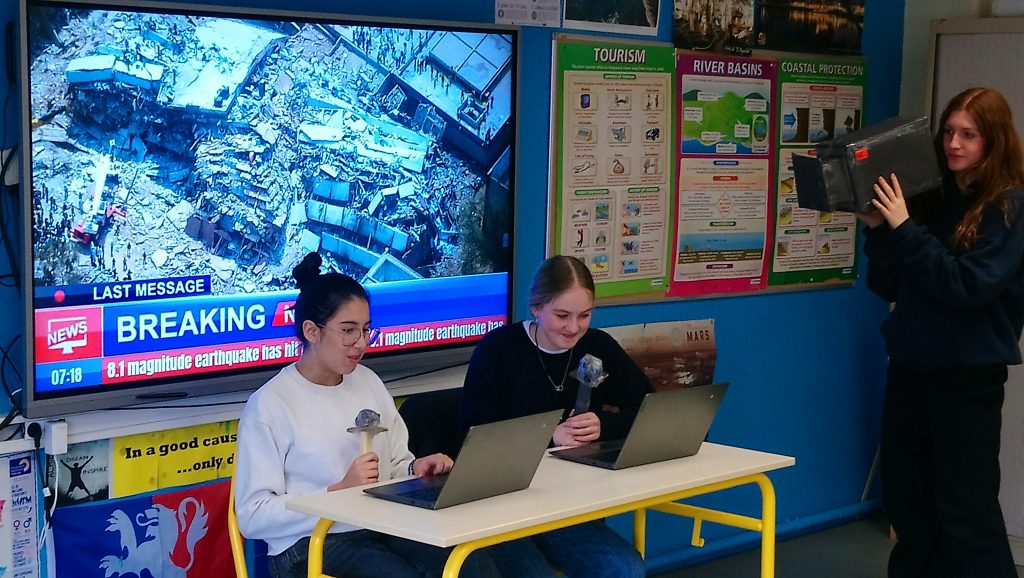
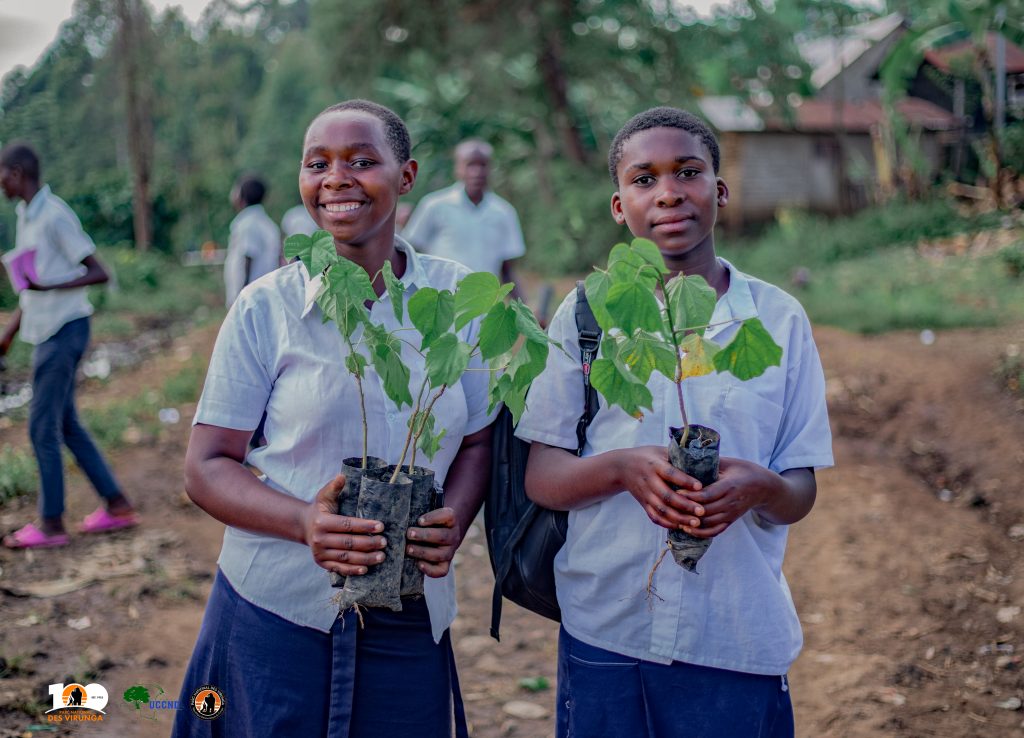
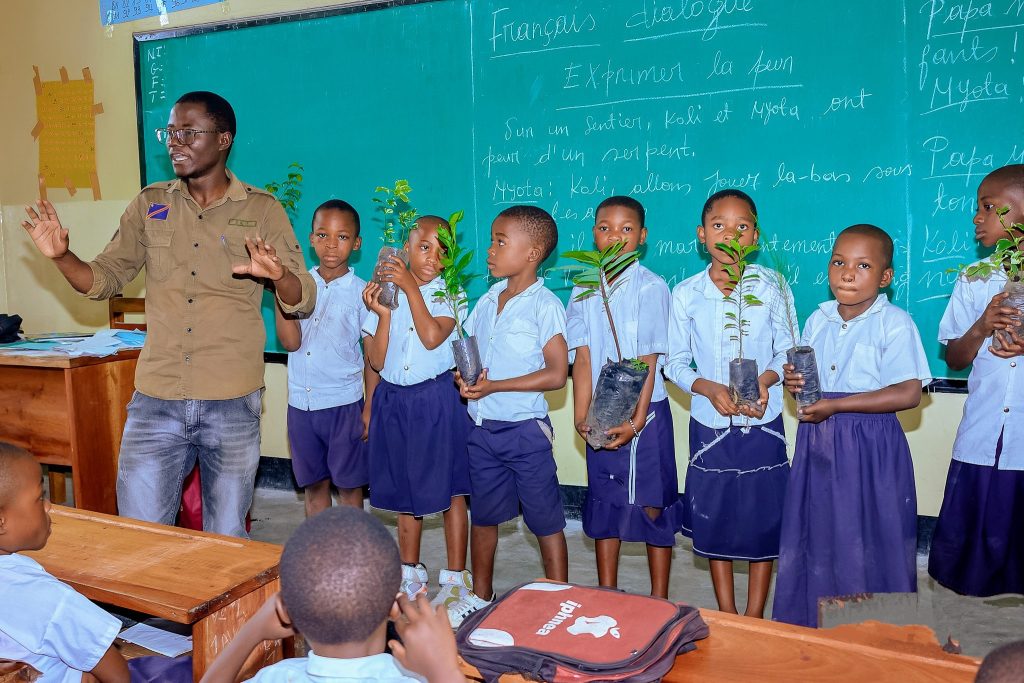
David: We organise educational workshops in schools and within the community, with a particular focus on young people. These workshops address topics such as biodiversity, climate change, renewable energy, and the sustainable management of natural resources. Practical activities are added to combine theory with practice – such as planting native and fruit trees.
To equip young people living around Virunga National Park with the necessary knowledge and skills on environmental issues, and to ensure the sustainability of our environmental and climate education initiatives, UCCND ASBL is creating Virunga Young Champions Eco-Clubs in schools and communities, which we work with throughout the year.
These Eco-Clubs aim to bring together, train, and inspire young people so they can take action – both individually and collectively – to conserve the Park’s biodiversity, fight climate change, and use natural resources sustainably.
Thanks to our large network of community eco-educators around Virunga National Park, we organise two training workshops each month with members of the Virunga Young Champions Eco-Clubs on different themes.
We combine environmental learning with concrete actions such as planting native and fruit trees to introduce the young people we mentor to eco-friendly practices, so they can take meaningful action to protect the environment and restore local forest ecosystems.
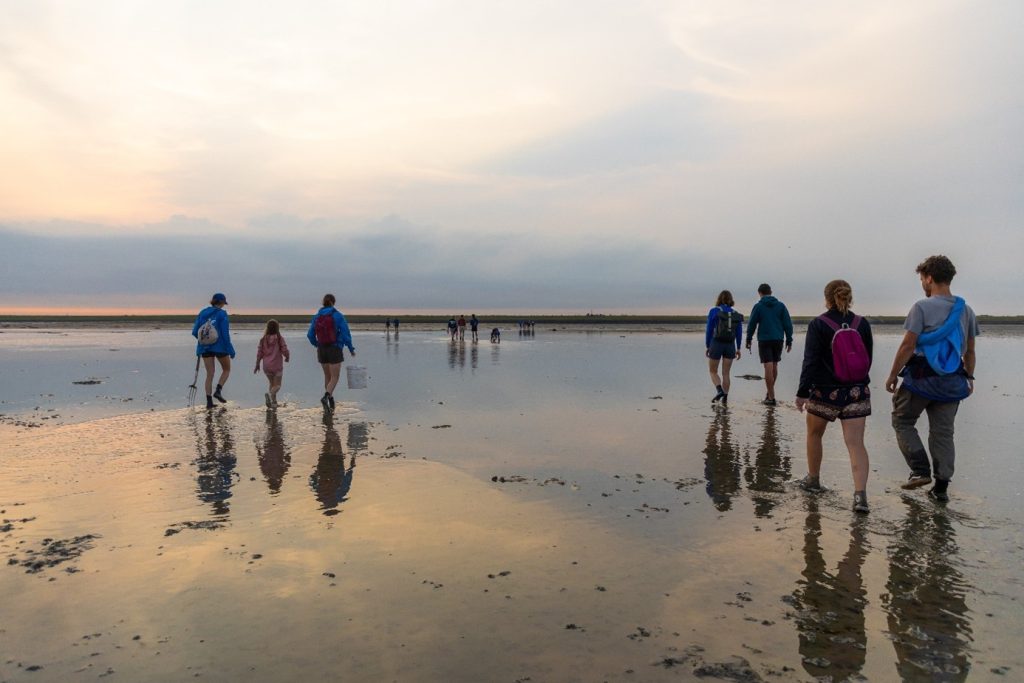
We have a saying: you only protect what you know. That is why we organise educational eco-hikes in Virunga National Park, to allow the young people we mentor to contemplate the rich biodiversity that surrounds them and learn to care for it.
Andreea: Some might say that students in Japan, Australia, or Romania don’t need to learn about environmental issues in the DRC. Why is Virunga’s story important internationally? What would you like young people in the Global North to know about your work?
David: First, it is important to explain to young people in the Global North the crucial role played by the Congolese forests – particularly Virunga National Park – in storing greenhouse gases emitted worldwide, thereby helping fight climate change for the well-being of humanity. Consequently, the destruction of the Park’s forests contributes to increasing greenhouse gas emissions, impacting the climate of all countries.
It is also important to explain to them that Virunga’s forest is home to an incredible wealth of biodiversity, including rare species that are endemic to the region – such as mountain gorillas – which could become extinct if nothing is done on the ground. The loss of biodiversity in Virunga National Park could disrupt global ecological balance.
Young people in the North must also understand that oil companies – most of which are headquartered in Western countries – contribute significantly to the destruction of biodiversity, the climate, and the livelihoods of local communities in the Global South. If we truly want to leave a liveable planet for present and future generations, we must join forces to say no to all new oil exploration and exploitation projects in our countries and push our leaders to accelerate and scale up investment in renewable energy.
I hope we can introduce these topics in schools by writing and integrating modules on biodiversity, climate change, and the importance of conservation into school curricula. I would like to organise exchanges between schools in the North and South to share experiences and initiate joint conservation projects. We could easily use digital platforms to create connections between students around the world, enabling discussions on environmental issues.
Virunga’s history is a symbol of resilience and the struggle for conservation amid socio-economic challenges. For over 20 years, Virunga has experienced numerous periods of armed conflict, often starting inside or around the Park. However, thanks to the efforts of the Park’s eco-guards – who are on the front lines, sometimes at the cost of their lives – local communities, partner support, and the work of civil society organisations such as UCCND ASBL, the Park has reached its 100th anniversary despite these challenges.
Environmental issues in the Democratic Republic of Congo – particularly those relating to Virunga National Park – have consequences that go beyond national borders. We want to build connections with young people in the Global North to work together for conservation and sustainability. We believe that local actions can have a global impact and that together, we can meet today’s environmental challenges and leave a liveable planet for present and future generations.
Virunga’s history illustrates perfectly how biodiversity is both a world heritage treasure and a foundation for sustainable development in the region – and how its future depends on a balance between conservation and community development, as well as international solidarity.
Andreea: Congratulations on the Park’s 100th anniversary and for the inspiring work that you are doing!