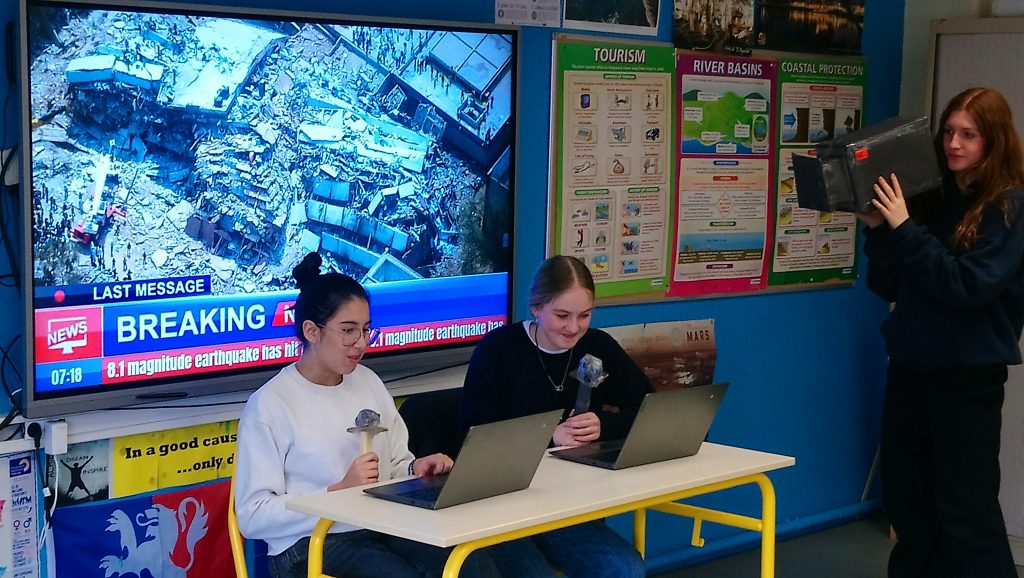
When the EYES students learn about climate change, they’re given the tools of storytelling.
Armed with a new way of diving into the complex topics of tipping points, climate inequality, and planetary boundaries, they learn to see everything around them through curious, questioning eyes.
Using narrative to communicate complex information has been found to improve a student’s comprehension, interest and engagement with complex topics like climate change.
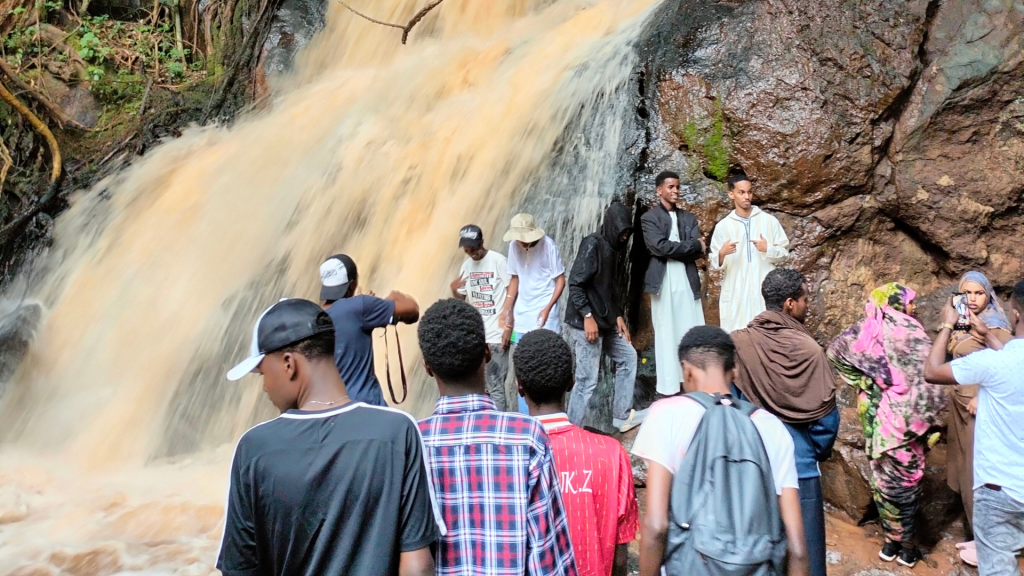
Stacy, an EYES student in Nairobi, Kenya, visited the Karura Forest, where she saw the meaning of the forest through the tool of storytelling. This is her reflection.
The Quiet Collapse
By Stacy, EYES student at Don Bosco youth education centre, Kenya
Ever wondered how one small change could push the climate past the point of no return? This question is central to the study of tipping points which refers to thresholds beyond which a small change can lead to significant and often irreversible shifts in the ecosystems. This could affect ecosystems such as forests like in my case the Karura Forest which I had the privilege of visiting.
During our school visit, I was able to personally enjoy the benefits of Karura forest. The forest, which is also a historical site, was used as a hideout by our freedom fighters (the MauMau) during the fight for our country’s freedom from the colonials. The MauMau used the forest as a hide-out since they know the terrain there better than the white colonialists who got lost in there. If it were not for the caves inside the forest maybe we could still be colonised since all the freedom fighters would have been arrested easily.
The landscape of the forest is also good for hiking and bonding, making it a good space for mental and physical health. The terrain, which is mostly uphill and downhill, makes you forget about time, and suddenly you have hiked a distance of over 10km.
The forest, which covers approximately 2570 acres, is also considered the lungs of Nairobi city. With urban cities facing a problem of air pollution, the trees in the forest counter these effects by providing clean air and taking in the carbon produced by the many activities in the city. The air in the forest is so fresh that it can be healing to someone with breathing problems.
Karura Forest is a vital, green space in Nairobi, and plays a crucial role in supporting biodiversity and regulating local climate. Activists like Wangari Maathai fought for the forest when outsiders tried to grab it. There’s many indigenous trees in the forest that pay homage to animals like monkeys and other insects (I encountered so many ant trails). These animals need a home, which the forest generously offers.
However increasing environmental pressures such as deforestation and pollution keep pushing this ecosystem towards its own tipping point with long-term consequences.
Some of the key environmental tipping points being faced in Karura Forest include:
Deforestation: where too much of the forest is lost due to illegal logging impacting to loss of biodiversity and increased soil erosion.
Pollution: which is caused by contamination in the water from Nairobi’s growing urban centre thus harming aquatic life.
Climate change: rainfall patterns change and temperature keep rising leading to some plants and animals species not surviving.
Human Activities: activities such as biking and foot traffic could degrade soil if not done with proper regulation thus leading to vegetation damage and disturbance to wildlife.
Despite these challenges, Karura Forest has seen significant conservation successes which has been brought about by taking legal actions against encroachment and the removal of exotic species.
Ecological tipping points in Karura Forest may be limited by addressing factors such as land encroachment, pollution, climate change and human activities thus preventing critical thresholds that could lead to irreversible ecological change.