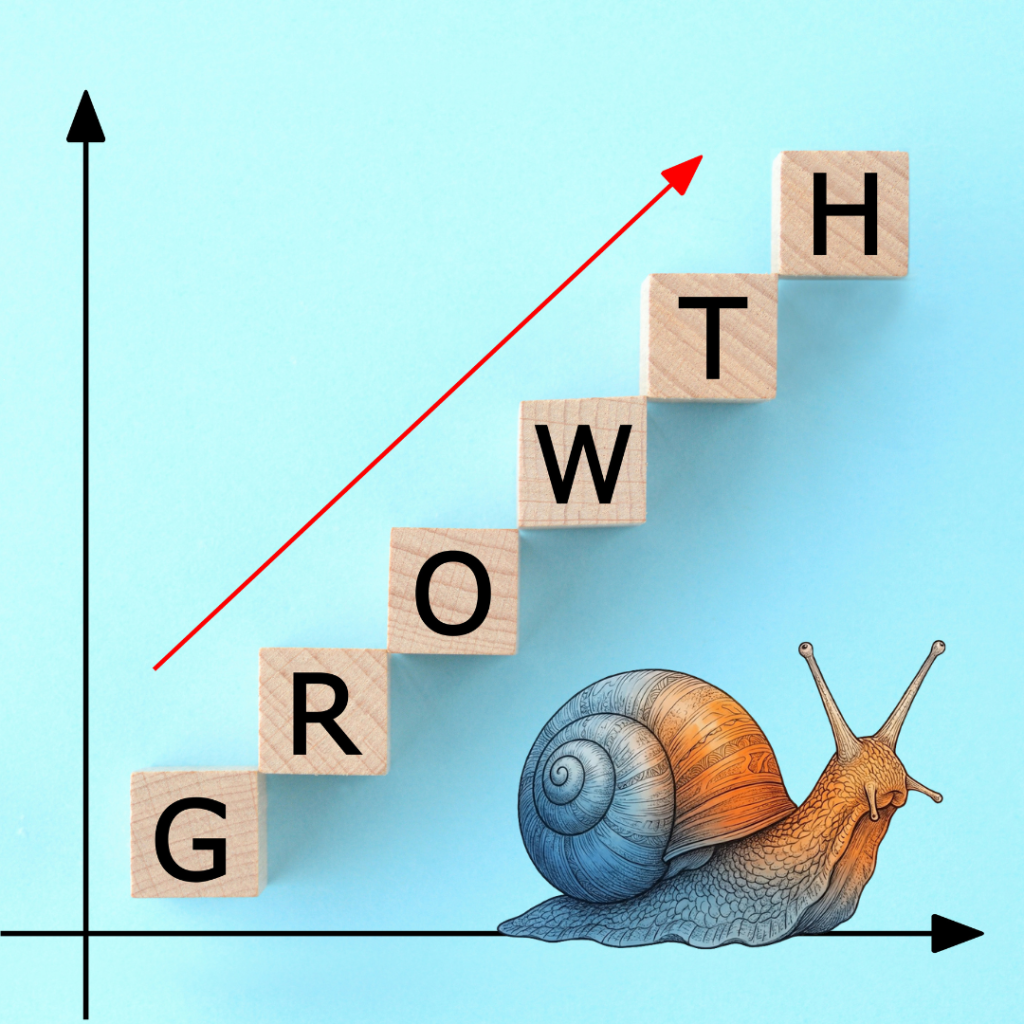
Explore the big question: can and should our economy grow forever on a finite planet? This interactive unit helps students understand degrowth, rethink GDP, and imagine a future where wellbeing and the environment come first.
Learning objectives:
- Understand what GDP measures and explain its limitations in relation to wellbeing, inequality, and environmental sustainability.
- Explain the concepts of relative and absolute decoupling, and evaluate the debate between green growth and degrowth using evidence.
- Assess how different economic pathways (grow, shrink, transform) could operate within planetary boundaries.
This unit can be used in economics, geography, civic education, or language classes (or similar).
Unit activity:
In the Grow – Shrink – Transform activity, students step into the role of citizens with decision-making power to redesign their local economy for collective wellbeing within planetary boundaries. Working in groups, they decide which sectors should grow, shrink, or transform and explore what those choices would mean for people, communities, and the environment.
Time frame:
We recommend using two classes on this unit.
Extra resources for further reading
Books:
- Jason Hickel: Less is More: How Degrowth will Save the World (2020)
- Amitav Ghosh: The Nutmeg’s Curse (2021)
- Raj Patel and Jason W. Moore: A History of the World in Seven Cheap Things (2017)
- Robin Wall Kimmerer: Braiding Sweetgrass (2013); The Serviceberry (2022)
- Learn and actively reflect upon alternative economic thinking (such as Doughnut economics, degrowth, alternatives to development): what are their main proposals, and how different are they from current ways of organising our societies?
Videos:
- Two short video explanations of degrowth can be found here and here.
- Visions of a ‘good life’ from around the world can offer alternatives to GDP-oriented development that are more sustainable: watch this video about ubuntu (Africa) and this short video about buen vivir (Latin America).