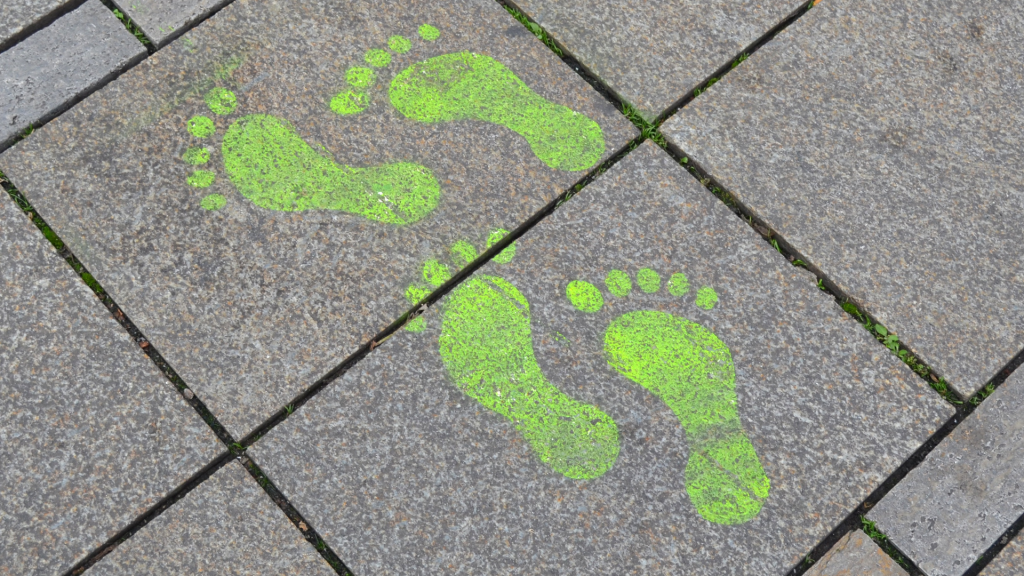
In this unit, learn why the individual carbon footprint is a band-aid solution, and what we should be focusing on instead
Learning objectives:
- Critically assess the solutions put forward by powerful players
- Better understand one’s own place in the climate crisis
- Comprehend, explain, and communicate a complex topic to an audience
GreenComp alignment:
- Systems thinking
- Exploratory thinking
- Supporting fairness
- Collective action
This unit could be used in social science, geography, language or similar classes.
Unit project:
Students will create a multimedia explainer, looking at the individual carbon footprint critically, and explaining to an audience how the individual carbon footprint came about, and which solutions it tends not to include. Using the data and information from the unit, (and other research), students will produce a complete report with words and visuals.
Time frame:
We recommend spending two or three classes on this unit. The first one to two classes should be focused on the text, allowing students to discuss and comprehend sections. The second to third class should be focused on research and the project.
Here are the lesson slides to accompany the pdf
Extra resources for further reading
Oxfam International on climate inequality:
- Carbon Inequality Kills: Why curbing the excessive emissions of an elite few can create a sustainable planet for all (2024) https://policy-practice.oxfam.org/resources/carbon-inequality-kills-why-curbing-the-excessive-emissions-of-an-elite-few-can-621656/
- Climate Equality: A Planet for the 99% (2023) https://policy-practice.oxfam.org/resources/climate-equality-a-planet-for-the-99-621551/
Project Drawdown outlines a variety of climate solutions that go beyond individual action. https://drawdown.org/explorer
SOMO researches corporate impacts on people and the environment, with strong work on mining and climate justice. https://www.somo.nl/
Global Witness investigates abuses and corruption in fossil fuels, mining, and land use to advance environmental and human rights. https://globalwitness.org/en/